About Diaphragm Gauges
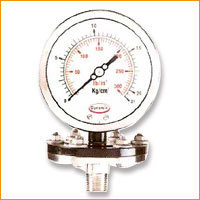
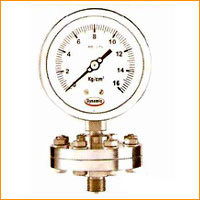
With an aim to become a leading entity in this domain, we are affianced in offering optimum grade Diaphragm Gauges. These gauges are broadly used for measuring as well as displaying pressure and temperature in an integral unit. The provided gauges are widely demanded in various industrial applications like petroleum, gas & oil refinery, fertilizer and water sewage plants. Besides, the offered Diaphragm Gauges are available in different specifications for our valued clients.
Features:
- Provides high accuracy
- Seamless finish
- Flawless design
- Easy to fit
Robust Performance for Challenging ApplicationsPurpose-built for harsh operating conditions, these diaphragm gauges are suitable for measuring pressure in systems handling acids, chemicals, corrosive agents, or heavy viscous fluids. The welded diaphragm element and high-quality seal materials prevent media ingress, while the shatterproof glass window secures gauge integrity. With a maximum operating temperature of up to 65C, these gauges deliver accurate results in demanding industrial settings.
User-Friendly Design & Flexible Mounting OptionsFeaturing a bottom connection and a surface mounting option, these gauges simplify installation across diverse process setups. The easy-to-read analog dial, available in standard 100 mm or larger 150 mm full-view sizes, is complemented by a black-finished aluminum pointer for clear visual distinction. External zero adjustment (optional) empowers users to recalibrate the gauge on-site without disassembly.
FAQs of Diaphragm Gauges:
Q: How does the diaphragm type benefit pressure measurement in corrosive or viscous media?
A: The welded, single or double diaphragm isolates the measuring element from the process medium, preventing corrosion or clogging. This design is ideal for corrosive, abrasive, or highly viscous fluids, ensuring long-lasting operation and precise measurement without compromising internal components.
Q: What customization options are available for mounting and process connections?
A: These gauges offer bottom and surface mounting options to suit different installations. The standard connection thread is 1/2 BSP (M), but custom thread types and process connection materials are available on request to match specific plant requirements.
Q: When should I choose PTFE or Neoprene gaskets and seals?
A: PTFE is recommended for handling aggressive chemicals and high-temperature applications because of its excellent chemical resistance. Neoprene is suitable for less aggressive media and provides effective sealing at moderate temperatures. Selection depends on your process media and operating conditions.
Q: Where are these diaphragm gauges typically installed?
A: These gauges are typically installed on pipelines, reactors, tanks, and process equipment dealing with acids, chemicals, or corrosive and viscous substances. Their robust construction and IP65 protection make them apt for demanding industrial locations.
Q: What standard and protection class do these gauges conform to?
A: The gauges are manufactured in accordance with IS 3624 and EN 837-3 standards, ensuring quality and measurement reliability. The IP65 protection class guards the internal mechanism against dust and water ingress, enhancing lifespan and dependability.
Q: How do I maintain or recalibrate the gauge after installation?
A: Regular visual inspection for damage and periodic zero adjustment (if equipped) are usually sufficient for maintenance. The external zero adjustment option allows for quick recalibration on-site without removing the gauge from the process line.
Q: What are the primary benefits of using this industrial diaphragm gauge?
A: Key benefits include accurate pressure monitoring even with corrosive or clogged process media, higher over-pressure safety margins, maintenance-friendly features, and customizability for different industries, making these gauges reliable for critical applications.





 Send Inquiry

 Send Inquiry
 Send Inquiry
 Send SMS