About Mercury Gas Metal Thermometers
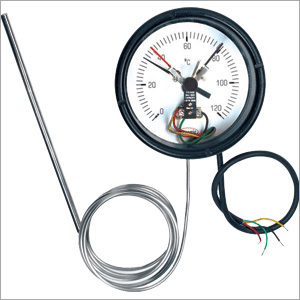
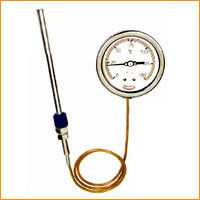
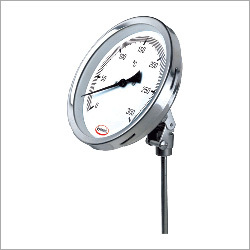
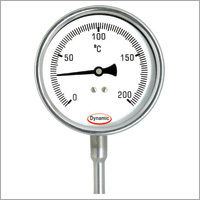
Believing on assured transparent deals, we have been successfully engaged in manufacturing, exporting and supplying supreme quality Mercury Gas metal Thermometers. These thermometers are manufactured by our deft professionals using quality assured components and contemporary techniques at our advanced manufacturing unit. Widely used for measuring temperature of metals, the provided thermometers find application in various engineering and research applications. Additionally, the offered Mercury Gas metal Thermometers can be purchased at marginal rates from us.
Features:
- High sensitivity
- Easy to use
- Accurate measurement
- Slight deflection
Versatile Industrial DesignCrafted with corrosion-resistant stainless steel (SS304/SS316) and a robust IP65-rated enclosure, these thermometers ensure longevity and resilience in harsh industrial environments. Available with a wide range of dial, stem lengths, and connection types, they are suitable for chemical plants, refineries, and process automation.
Accurate and Reliable MeasurementsUtilizing the thermal expansion properties of mercury or inert gas, these mechanical thermometers provide precise analog readings from 0C to 300C with a resolution of 1C. The black-on-white scale and aluminum pointer enhance readability and facilitate efficient temperature monitoring for critical processes.
FAQs of Mercury Gas Metal Thermometers:
Q: How does a Mercury Gas Metal Thermometer operate in industrial settings?
A: This thermometer utilizes the thermal expansion of mercury or inert gas within a sealed metal capsule. Changes in temperature cause the fluid to expand or contract, moving the pointer on the analog dial to indicate the current temperature.
Q: What are the key benefits of using SS304/SS316 stainless steel for the case material?
A: SS304 and SS316 stainless steel provide excellent resistance to corrosion, chemicals, and mechanical impact, ensuring the thermometers durability and suitability for demanding environments like chemical plants and refineries.
Q: When should I use a back, bottom, or every angle connection type?
A: The choice of connection type depends on installation requirements and accessibility. Back entry is ideal for panel mounting, bottom entry suits pipe or tank mounting, and every angle connections offer versatility for installations in limited or awkward spaces.
Q: Where are these metal thermometers typically installed?
A: These thermometers are commonly installed in industrial processes such as chemical plants, refineries, and manufacturing facilities to monitor temperature within reactors, pipelines, tanks, and other equipment.
Q: What process connections are available, and how do I select the appropriate one?
A: These thermometers are offered with threaded or flanged connections. Selection depends on system compatibility: threaded is often used for direct installation, while flanged is chosen for applications requiring secure, leak-resistant mounts.
Q: How is the device maintained and what is its expected lifespan?
A: Thanks to the robust construction (IP65, corrosion-resistant materials), minimal maintenance is required. Regular checks for calibration, cleanliness of the dial and window, and inspection of the mechanical connection ensure a long operational life.
Q: What advantages does an analog dial provide over digital displays in industrial thermometers?
A: Analog dials offer immediate visual feedback, require no external power, and function reliably across wide temperature ranges, making them immune to electrical disturbances common in industrial environments.





 Send Inquiry

 Send Inquiry
 Send Inquiry
 Send SMS