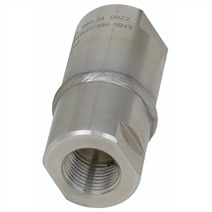
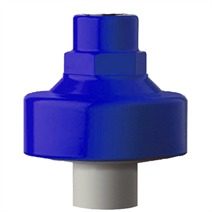
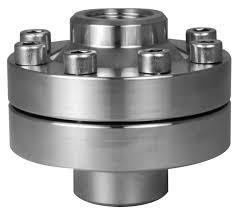
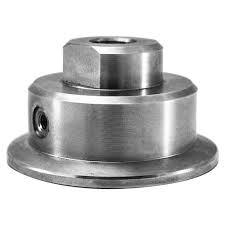
About Threaded Process Connection Diaphragm Seals
Threaded Process Connection
Description
Pressure ranges and diameter of diaphragm
The maximum pressure range is dependent on the effective diameter of the diaphragm (Mb) and the process temperature (here max. +50 C)
Mb 22 mm: 0 ... 1000 bar
Mb 29 mm: 0 ... 600 bar
Mb 40 mm: 0 ... 400 bar
Mb 52 mm: 0 ... 160 bar
See also diagram pressure-temperature rating on data sheet
Process connection- Thread G B (male), G B (male) similar to EN 837-1,
without centering spigot - Thread G , G (female)
- Thread NPT, NPT (male)
- Thread NPT, NPT (female)
- Other on inquiry
Superior Material and ConstructionThese diaphragm seals use high-grade SS316 stainless steel and optional Hastelloy C for extreme chemical resistance and long-lasting performance. PTFE backing is available for demanding environments, ensuring compatibility with a wide range of process media.
Flexible Mounting and Connection OptionsAvailable in threaded styles and connection sizes like 1/2 NPT, both male and female, these seals can be mounted directly or remotely according to process needs. They support BSP/NPT threads to easily integrate into various industrial settings.
Precision and Durability for Demanding ApplicationsWith a surface finish of Ra 0.8 m and a tight manufacturing tolerance of 0.02 mm, these seals are ideal for precise pressure measurement in corrosive and viscous media, offering high pressure and temperature compatibility.
FAQs of Threaded Process Connection Diaphragm Seals:
Q: How is the diaphragm seal installed in a pressure measurement system?
A: The diaphragm seal can be directly mounted onto the pressure instrument or connected remotely using flexible tubing, depending on your application needs. It is available in both male and female threaded connections (BSP/NPT), facilitating easy integration with existing equipment.
Q: What are the benefits of using SS316 or Hastelloy C diaphragm seals?
A: Seals made from SS316 and Hastelloy C offer superior resistance to corrosion and compatible with harsh chemical environments. This ensures longevity and dependable performance in challenging industrial conditions such as petrochemical, pharmaceutical, and food processing sectors.
Q: When should PTFE backed wetted parts be selected for the diaphragm seal?
A: PTFE backed wetted parts are recommended when measuring pressure in processes involving highly corrosive or sticky materials, as PTFE provides additional chemical resistance and prevents media from adhering to the seal surface.
Q: What fill fluids are available for these diaphragm seals and how are they chosen?
A: Fill fluids such as glycerin and silicone oil are standard, but other fluids can be specified based on process requirements. The selection depends on compatibility with process media, operating temperature, and the need to achieve accurate pressure transmission.
Q: Where are threaded process connection diaphragm seals commonly used?
A: These diaphragm seals are widely used in industries like chemical, petrochemical, pharmaceutical, and food processing, especially where pressure measurements must be made in corrosive, viscous, or high-pressure environments.
Q: What key features ensure the durability of these diaphragm seals for industrial usage?
A: Their high hardness, fine surface finish (Ra 0.8 m), tight tolerance (0.02 mm), and robust construction with corrosion-resistant materials contribute to the seals durability, making them suitable for continuous operation in challenging industrial conditions.
Q: How does using a diaphragm seal improve the accuracy of pressure measurements?
A: By isolating the pressure sensor from direct contact with aggressive or viscous process media, the diaphragm seal prevents clogging, corrosion, and contamination, which helps maintain the accuracy and longevity of pressure measurement instruments.





 Send Inquiry

 Send Inquiry
 Send Inquiry
 Send SMS